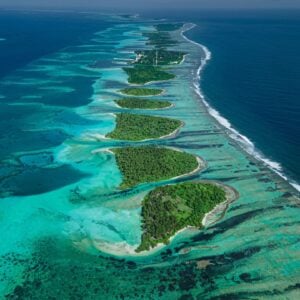

On 18 December 2022, the Government ratified the First Amendment to the Uninhabited Islands Act, which modifies the rules regarding the allocation and leasing of uninhabited islands for various purposes, including Varuva.
The Amendment clarifies the purposes for which uninhabited islands can be allocated and by whom they can be granted. These purposes include granting Varuva for island upkeep, as well as leasing for industrial use in areas such as fishery, agriculture, or non-tourism related industries. The President holds the authority to allocate purposes for uninhabited islands not within the jurisdiction of any local council, and local councils may be granted such islands with the relevant Ministry’s approval. The Amendment defers the detailed approval procedure to be specified in a regulation enacted under the law.
Changes brought to granting of Varuva
The Amendment has also brought changes to the power to grant uninhabited islands for Varuva. Local councils can now grant uninhabited islands within their jurisdiction for Varuva, while the Ministry with the mandate of agriculture has the power to grant for Varuva those uninhabited islands that do not fall within the jurisdiction of any local council. Both the local councils and the Ministry can terminate the Varuva if the grantee of the Varuva island violates the terms. Even where there is no fault of the grantee of the Varuva island, both the local councils and the Ministry can expropriate the Varuva island for government use by giving 30 days’ notice. Unlike the Original Act, where compensation will be given where a termination has occurred without any fault of the grantee of the Varuva island, the Amendment has revoked the right to compensation in such instances of termination. The Amendment defers the rules relating to granting of and revoking of Varuva to be specified in a regulation enacted under the law.
The Amendment also prohibits the transfer, leasing, and assigning of responsibilities to upkeep an island granted for Varuva to a third party. The grantee of the Varuva island is allowed to keep their employees in the island for the purpose of maintenance and upkeep of the island.
Changes brought to granting of lease
The Amendment now mandates that leases be granted based on specific criteria, although the process for applying to lease an uninhabited island, whether through a solicited or unsolicited proposal, remains the same. The Amendment defers these criteria to be specified in a regulation.
Under the Amendment, the power to lease uninhabited islands for industrial use lies with the relevant Ministry pertaining to a specific industry. A relevant Ministry may grant the lease of an uninhabited island for such use, if the uninhabited island does not fall within the jurisdiction of any local council. Local councils also have the power to lease uninhabited islands that fall within their jurisdiction but only for purposes other than industrial use.
If the Government decides to allocate an uninhabited island within the jurisdiction of a local council as an industrial island, the Amendment requires such uninhabited island to be excluded from the jurisdiction of that local council in accordance with the Decentralization Act.
A salient change brought in by the Amendment is that it permits the extension of the lease period up to 50 years, subject to fulfillment of conditions. However, the conditions which need to be fulfilled to obtain the benefit of the extension are yet to be established under a regulation, as deferred by the Amendment.